

Written by Rev. Dr. Joanne Angel BarryColon, Founder of Wholistic Fitness NY LLC and wholistic integrative teacher with over 40 years of experience in health, fitness, and emotional healing, supporting women over 40 to reconnect with their strength and release emotional weight.
If you spent your late teens, twenties, or even thirties moving from one fad diet to another, your body may have spent years adapting to periods of restriction, under-fueling, and repeated weight loss and regain.
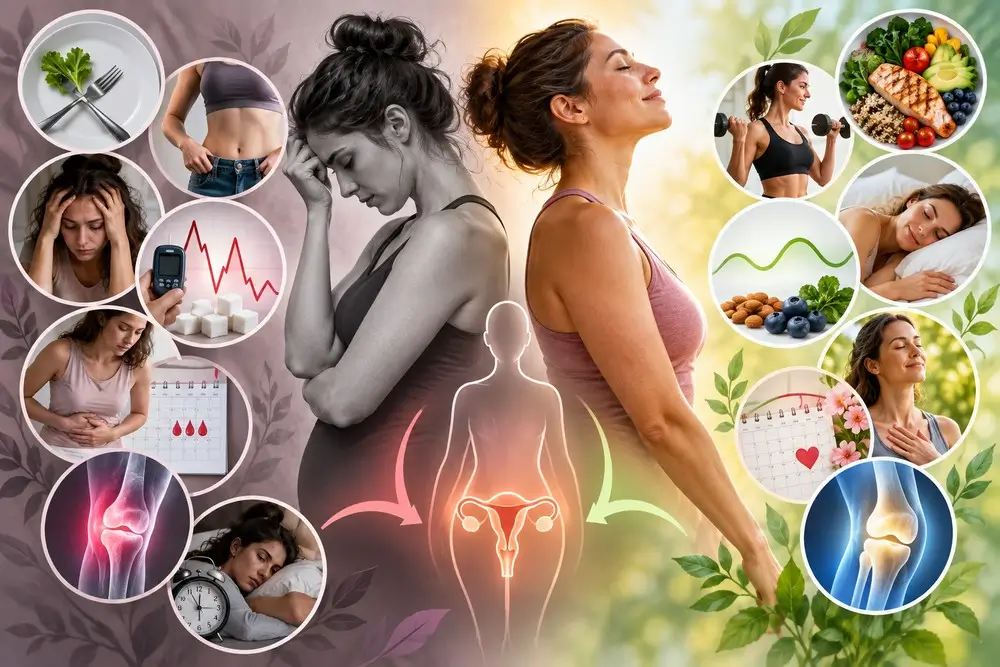
For decades, women have been encouraged to eat less, cut calories, eliminate carbohydrates, skip meals, fast longer, and exercise more in pursuit of a smaller body. But we rarely talk about what years of restrictive dieting and inadequate nutrition may mean for a woman’s metabolism, menstrual cycle, energy, muscle mass, and hormonal health.
As women approach midlife, symptoms such as fatigue, menstrual changes, sleep disturbances, mood changes, decreased exercise performance, joint discomfort, and changes in body composition may appear. These can certainly occur during perimenopause, but nutrition, stress, sleep, training load, medications, thyroid conditions, iron deficiency, and other health factors can also contribute.
What Happens When You Chronically Under-Fuel?
When the body consistently receives less energy than it needs, it adapts.
Your total daily energy expenditure can decrease. You may unconsciously move less, exercise performance may decline, and the body can make hormonal adaptations designed to conserve energy. Significant or prolonged energy deficiency can also interfere with normal reproductive function.
This is one reason why simply telling a midlife woman to “eat less and exercise more” isn’t always the best answer.
For a woman who has spent decades dieting, another aggressive calorie deficit may add additional stress rather than address what her body actually needs.
Nutrition, Blood Sugar, and Energy
The quality and consistency of our nutrition also matter.
Going long periods without eating or consuming meals that do not provide enough protein, fiber, healthy fats, and nutrient-rich carbohydrates may contribute to fluctuations in blood glucose for some women. That can feel like an energy roller coaster: energized one moment, followed by fatigue, shakiness, irritability, hunger, or cravings later.
Rather than automatically responding by restricting food even further, it may be worth looking at how the body is being fueled throughout the day.
Balanced meals containing protein, fiber-rich carbohydrates, healthy fats, fruits, vegetables, and adequate fluids can help support steady energy and overall metabolic health.
What About Those Stiff, Achy Joints?
A woman may wake up one morning and notice that her hips, knees, shoulders, or hands suddenly feel stiffer than they used to.
Hormonal changes during the menopausal transition can play a role in musculoskeletal symptoms, but we should also look at the bigger picture.
Poor nutrition can mean the body isn’t consistently receiving adequate protein, essential fats, vitamins, minerals, and overall energy needed to support muscle, bone, and connective tissues. Dehydration, inadequate recovery, loss of muscle, inactivity, excessive exercise, and other medical conditions can contribute to discomfort and stiffness as well.
Before assuming every ache is simply “because I’m getting older” or “because I’m in menopause,” consider your nutrition, hydration, movement, strength, sleep, and recovery.
Your Menstrual Cycle Is Giving You Information
Long before midlife, the menstrual cycle can provide valuable information about a woman’s overall health.
Severe calorie restriction, low energy availability, rapid weight loss, excessive exercise, or inadequate nutrient intake can disrupt reproductive hormones in some women. Cycles may become irregular, periods may become lighter, or menstruation may stop altogether.
Nutrition may also influence how a woman experiences her cycle. Menstrual cramps and other symptoms can have multiple causes, and painful periods should not simply be dismissed as a nutrition problem. However, adequate nourishment is an important part of supporting overall reproductive health.
If periods repeatedly disappear, become significantly irregular, or cramps become severe, this deserves medical evaluation rather than simply assuming it is normal.
Fertility can also be affected when the body does not have sufficient energy available to support normal reproductive function. Nutrition is not the only reason someone may experience fertility challenges, but chronic under-fueling is one factor worth considering.
Nutrition Before Restriction
Instead of immediately focusing on cutting calories, I encourage women to begin asking different questions:
Am I eating enough protein to support and preserve muscle? Am I consuming enough nutrients? Am I eating carbohydrates and healthy fats? Am I strength training? Am I recovering between workouts? Am I sleeping well? Am I constantly stressed? Am I adequately fueling my activity level?
And perhaps most importantly:
Have I spent most of my adult life trying to eat less instead of learning how to nourish my body?
For women over 40, the conversation needs to become bigger than weight loss.
We need to talk about muscle preservation, strength, bone health, adequate nutrition, recovery, metabolic health, menstrual history, and hormonal health.
Perimenopause is real, and it is a natural stage of a woman’s reproductive transition. But not every change occurring in midlife should automatically be blamed on hormones.
Sometimes we need to look at the entire history of the woman standing in front of us, including how she has been feeding, moving, resting, and caring for her body for the last 20, 30, or 40 years.
Her body may not need another diet.
It may be asking:
Feed me. Nourish me. Strengthen me. Let me recover.
Explore Rev. Dr. Joanne Angel BarryColon’s work.
