


Running creator campaigns from spreadsheets stops working somewhere around the tenth creator.
Discovery lives in one tab, outreach in an inbox, contracts in a shared drive, and payments in whatever your finance team will approve.
An influencer marketing software collapses that into one system covering discovery, outreach, content approval, performance tracking, and payouts.
The five below all do that, and they differ most in whether they lead with finding creators, managing relationships, or tying creator activity back to revenue.
Key Takeaways
- Software is split into three broad types: discovery-first tools, relationship management systems, and end-to-end software that includes payments and attribution.
- Ecommerce integration is the dividing line for most brands, because it decides whether you can attribute sales to individual creators.
- Creator payments with built-in tax and compliance handling save more time than any discovery feature once a program scales.
- Long-term ambassador programs need different tooling from one-off campaign bursts.
- Enterprise software adds governance and multi-market reporting, which smaller teams generally do not need.
How these were compared
Each software was assessed on what it does structurally: how creators are found, how campaigns are managed, whether payments and attribution are built in, and which kind of team it is designed for. We favored capabilities that are consistent across sources rather than headline figures that vary.
We also picked software with genuinely different centers of gravity. Comparing five discovery tools would tell you nothing useful about which one fits your program.
The 5 Softwares
1. Upfluence
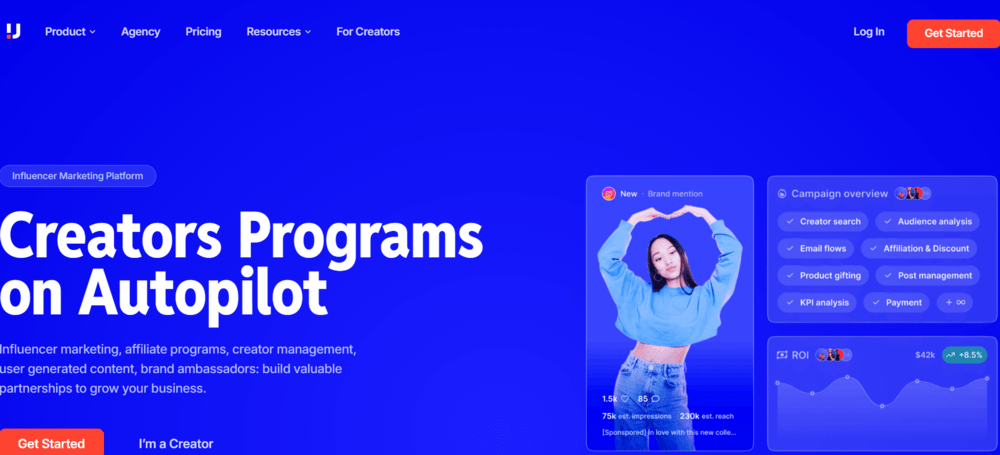
Upfluence is an influencer and affiliate marketing software built for ecommerce and DTC brands, organized around four functions: finding and attracting creators, managing programs, tracking and paying, and connecting to your own stack through an API.
It is one of the few software platforms treating influencer and affiliate activity as a single system rather than two tools.
Discovery works from your own customer base as well as an open marketplace, surfacing creators who are already your customers.
Its AI co-pilot, Jaice, recommends creators and drafts outreach, interpreting creator data across audience demographics, brand affinity, engagement quality, and content behavior.
The commerce side is where it differs most from discovery-led tools. Unique promo codes generate automatically and work natively with Shopify, WooCommerce, Magento, BigCommerce, and Amazon, with Amazon Attribution integration for marketplace campaigns.
Payments run in-software through PayPal or Upfluence Pay in any currency, with built-in KYC verification so compliance does not stall payouts.
Tracking attributes sales and ROI per creator through individual links, feeding a dashboard covering revenue, ROI, average order value, and commissions owed.
2. GRIN
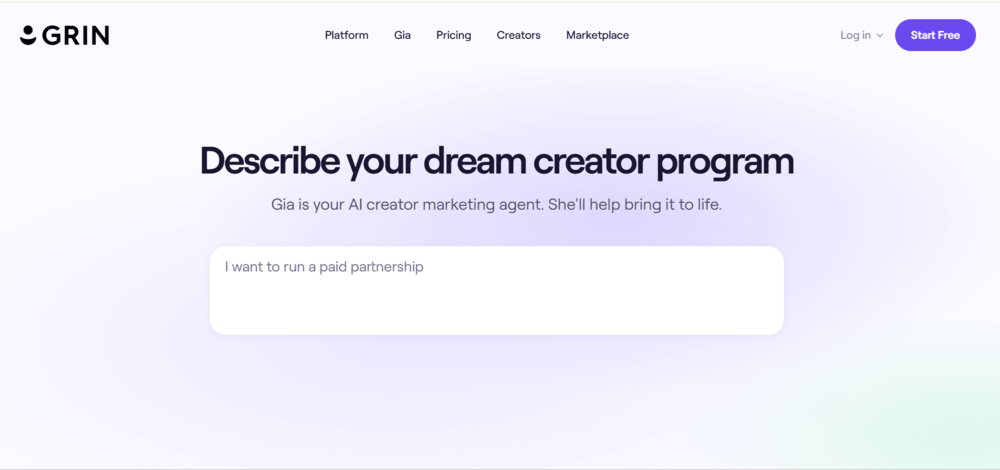
GRIN is a creator management system aimed at direct-to-consumer and ecommerce brands running structured ambassador and affiliate programs.
It treats creators as long-term partners rather than one-off placements, which shapes the whole product.
The core is relationship management. Discovery, a creator CRM, content briefs, gifting, affiliate tracking, and automated payments sit in a single workflow, with the same creators returning campaign after campaign.
Its e-commerce integration is the standout. GRIN pulls product data directly from Shopify and automates gifting and shipping, which removes a large amount of operational work from product seeding programs.
The trade-off is fit. It is built for brands with an established creator program and the volume to justify it, and reviewers consistently note that it is heavier than smaller teams need.
3. Aspire
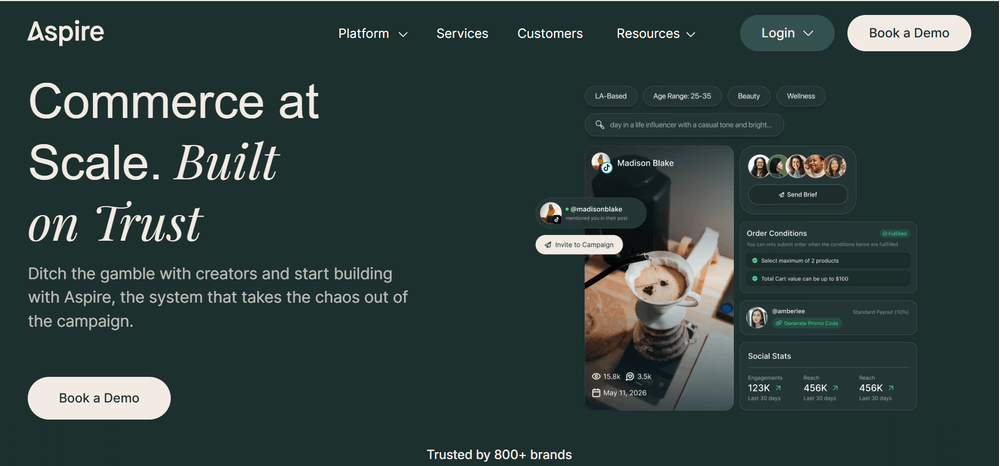
Aspire, formerly AspireIQ, is built around creator relationships rather than creator search. It suits brands that want a standing community of creators producing content continuously rather than a fresh roster each quarter.
Outreach, contracts, gifting, content approvals, and affiliate tracking all sit in one workflow. That combination works well for DTC and lifestyle brands running ambassador programs alongside UGC production.
It has expanded beyond its influencer marketing origins into affiliate commerce, creator payouts, and ecommerce features.
Shopify-driven creator partnerships are a particular focus, with product seeding and revenue attribution built in.
If your problem is keeping fifty creators active every quarter rather than finding fifty new ones, this is the model designed for it. The discovery side is lighter than on search-led software, which is the expected trade-off.
4. CreatorIQ
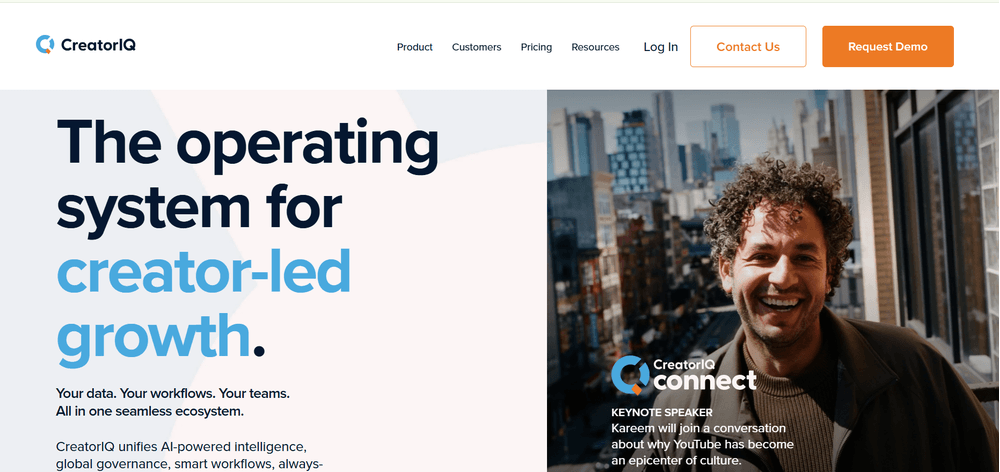
CreatorIQ is aimed at enterprise organizations running creator programs across multiple markets and teams.
It positions itself as an operating system for creator-led growth, combining AI, governance, and workflow.
Its discovery runs on a proprietary creator graph covering major social software. The emphasis sits less on raw database size and more on structured data across a large creator population.
Governance is the genuine differentiator. Large organizations running programs across regions need approval chains, brand safety controls, and consolidated reporting that smaller software does not attempt.
The trade-off is scale and cost. Reviewers consistently describe it as enterprise-focused, with a longer implementation and a steeper learning curve than mid-market tools.
For a single brand running one market, most of that machinery goes unused. It earns its place when several teams need to work in the same system under shared rules.
5. Modash
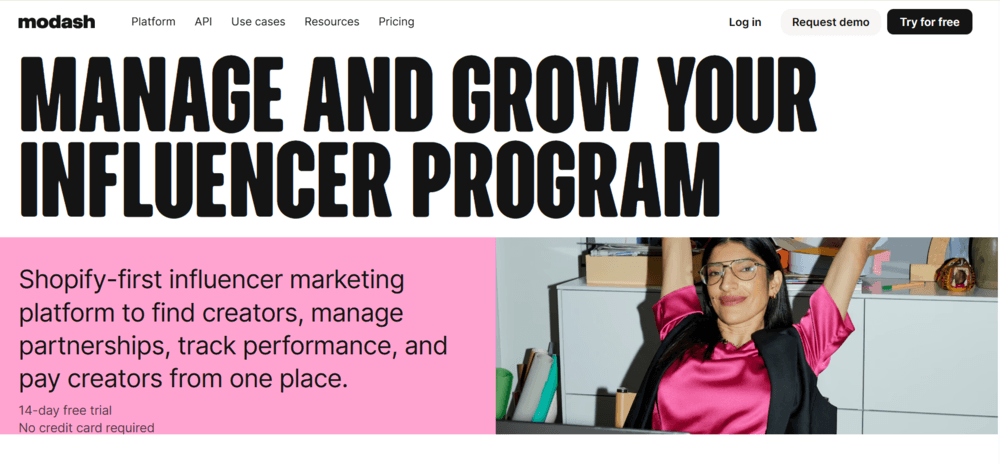
Modash leads with discovery and audience analysis rather than campaign management. It indexes public Instagram, TikTok, and YouTube profiles and lets you filter them against detailed audience criteria.
Audience verification is its strongest function. Checking whether a creator’s followers match your target demographic, and whether that audience looks genuine, is the job it is built to do well.
It is also self-serve, with published pricing and no sales call required to start. That matters for agencies and smaller teams who want to evaluate a software before committing.
The limitation is breadth. Relationship management and campaign workflow are lighter than on the software above, so it often works best alongside another system rather than replacing one.
That pairing is common in practice. Agencies frequently use a discovery tool to build shortlists and a separate software to run the campaigns those shortlists feed.
Quick comparison
| software | Center of gravity | Best suited to |
| Upfluence | Influencer and affiliate in one system with ecommerce attribution | DTC and ecommerce brands tying creators to revenue |
| GRIN | Creator relationship management with Shopify operations | Established DTC ambassador programs |
| Aspire | Long-term creator communities and UGC | Brands running standing creator rosters |
| CreatorIQ | Enterprise governance and multi-market reporting | Large organizations with regional teams |
| Modash | Creator discovery and audience verification | Agencies and teams whose bottleneck is finding creators |
How to choose
Start with your actual bottleneck. If you cannot find the right creators, a discovery-led tool solves that cheaply, and if you can find them but cannot keep them organized, you need relationship management instead.
Then check the ecommerce connection. If you sell through Shopify, WooCommerce, or Amazon and want to know which creator drove which sale, the software has to integrate with your store rather than report reach alone.
Finally, look at payments. Paying five creators is an afternoon; paying five hundred across currencies with tax documentation is a job, and software that handles KYC and compliance internally removes that entirely.
Conclusion
There is no single right software, only a closer or looser fit against how your program actually runs.
Discovery-led tools suit teams whose problem is finding creators, relationship systems suit standing ambassador programs, and end-to-end software suits brands treating creators as a measurable revenue channel.
Whichever direction you lean, run a real campaign through a trial before committing. These software tools all demonstrate well, and the difference shows up in how they handle your messiest workflow rather than a clean one.
FAQs
What is influencer marketing software?
It is software that lets brands find creators, run campaigns, track results, and pay creators in one place. The alternative is managing discovery, outreach, content approval, performance tracking, and payouts across separate tools.
How much do these software platforms cost?
Pricing usually depends on program size, the features you need, and whether you want agency support, which is why many software platforms quote custom plans rather than a single rate. Some publish tiers openly, and others require a sales conversation.
What is the difference between influencer software and affiliate software?
Influencer software focuses on finding creators and running content campaigns, while affiliate software focuses on tracking links and paying commissions on sales.
The line is blurring because brands increasingly want both content and performance from the same creators.
Can I recruit creators from my existing customers?
Some software supports this directly by matching your customer data against creator profiles. It tends to produce higher response rates, since someone who already buys from you has an obvious reason to collaborate.
Do I need software for a small program?
Not necessarily, and a handful of creators can be managed manually. The case for software strengthens once payments, contracts, and attribution across many creators start consuming more time than the campaigns themselves.
