

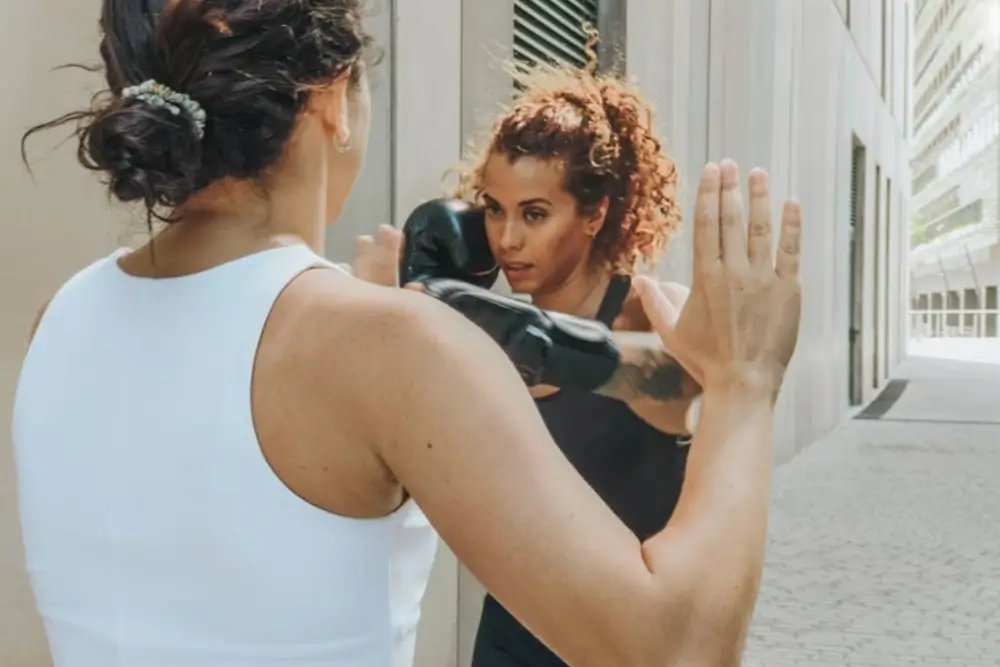
Learning about personal safety is about feeling confident and taking charge of your own well-being. Knowing self-defence basics is a way to care for yourself and gives you a powerful tool to move through the world with more assurance.
When you feel ready, you carry yourself differently, and that confidence can be your biggest strength. Taking steps to empower yourself through self-defence means investing in your personal security and peace of mind.
The Power of Awareness
Personal safety all starts with being aware. This doesn’t mean being paranoid, just being present and noticing what’s happening around you. It means putting your phone away when you’re walking alone, seeing who is nearby, and knowing where the exits are in public places. A big part of awareness is learning to trust your gut feelings.
If a situation or person feels wrong, don’t ignore that feeling. Your subconscious often picks up on small signs that something isn’t right. Being aware also means knowing what help and resources are out there, from local community classes to different self-defence products that can give you extra security.
Understanding Personal Boundaries
A really important, but often overlooked, part of self-defence is being able to set and stick to your personal boundaries. These are the limits you have for how others can treat you, talk to you, and interact with you physically. Good self-defence often starts long before things get physical.
Learning how to say “no” clearly, firmly, and without apologising is a skill. Setting personal boundaries is a proactive step that shows your limits and can calm down many uncomfortable situations before they become dangerous. Practice using a confident tone and strong body language to back up what you say.
Practising Confident Body Language
The way you carry yourself can also play a role in personal safety. Confident body language does not mean acting aggressive. It means walking with your head up, keeping your shoulders relaxed, making brief eye contact, and moving with purpose. These small habits can help you look more aware and less distracted.
Your posture can also affect how you feel. When you stand firmly and speak clearly, it can make it easier to set boundaries and respond calmly in uncomfortable situations. This is especially useful when someone is standing too close, pressuring you, or ignoring your limits.
Practising confident body language in everyday life can make it feel more natural when you actually need it. Whether you are walking alone, entering a new place, or dealing with an uncomfortable interaction, looking alert and self-assured can support the other safety skills you are building.
Basic Self-Defense Principles
If a situation does turn physical, the goal of self-defence isn’t to ‘win’ a fight, but to find a way to escape. Remembering a few key ideas is more helpful than trying to recall complicated moves when you’re under pressure.
- Use Your Voice: Shouting “Fire!” or “Get back!” can get attention and surprise an attacker, giving you a moment to act.
- Create Distance: Your main goal is to get as much space as possible between you and the threat.
- Target Vulnerable Areas: If you have to strike, aim for places most likely to cause pain and temporarily stop an attacker, like the eyes, nose, throat, and groin.
- Don’t Hesitate: Use surprise. React immediately and fully commit to creating your escape window.
Tools for Enhanced Personal Safety
Beyond physical moves, modern technology and simple tools can really boost your personal safety plan. A personal safety alarm, for example, can make a loud, piercing sound to disorient an attacker and get attention. Many smartphones also have emergency features built-in that can quietly alert your contacts and the police with your location.
Just making sure your phone is always charged and letting a friend or family member know your plans when you’re going somewhere new are simple but powerful habits. These tools aren’t a substitute for awareness and training, but they’re great additions to your safety kit.
Continuous Learning and Practice
Self-defence is a skill, and like any skill, you need to practice it to stay good at it. Reading articles is a great start, but real confidence comes from learning hands-on. Think about signing up for a good self-defence course in your area, especially one that focuses on real-life situations and simple, effective techniques.
Many courses are made for women and are taught in a supportive setting. Even practising your assertive voice or thinking through ‘what if’ scenarios in your head can help build the muscle memory you need to react well under stress. It’s an ongoing commitment to your own safety and empowerment.
Building your self-defence knowledge happens step by step, but every move you make adds to your confidence and personal security. Start with being aware, and keep building your skills from there.
