


If a big customer has ever sent you a supplier questionnaire asking for your carbon footprint, you know how quickly sustainability turns into a data problem. Suddenly you need numbers, a clear method and a report someone else can check.
Two European platforms come up often when companies start looking for help: Greenly and Sweep. Both measure emissions and support reporting, but they are built around very different kinds of organizations.
This review walks through how each one works, who it suits and what to ask before you book a demo.
Key Takeaways
- Greenly and Sweep are both carbon accounting platforms founded in France, Greenly in 2019 and Sweep in 2020.
- Greenly leans into guided carbon assessments, product life cycle analysis and ready-made reduction plans.
- Sweep centers on sustainability data management for enterprises, mid-market companies and financial institutions.
- Neither publishes list prices, so expect to start with a demo request.
- The right choice depends on your size, your supply chain and which reporting rules apply to you.
Why Carbon Accounting Is on Founders’ Radar
Carbon accounting is the process of measuring the greenhouse gases an organization is responsible for. Emissions are usually split into Scope 1, 2 and 3, with Scope 3 covering the wider value chain, from purchased goods to business travel.
That last category is where things get tricky. It means gathering data from suppliers and partners, not just reading your own utility bills.
Regulation is part of the push. The EU’s Corporate Sustainability Reporting Directive (CSRD) and California’s SB 253 both require large companies to disclose emissions, and those companies often turn to their suppliers for the figures.
Even if no law applies to you directly, a client, investor or procurement team might still ask. Having reliable numbers ready makes those conversations much easier.
Greenly at a Glance
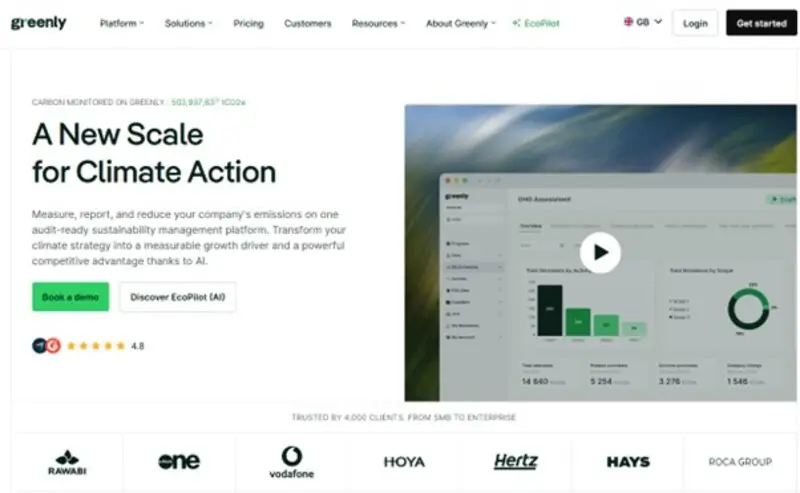
Greenly is a Paris-based climate tech company founded in 2019. Its platform pulls in data from sources like accounting exports, utility bills and cloud usage to calculate a footprint across all three scopes.
A big part of its appeal is how guided the experience feels. Greenly connects with more than 100 business applications and pairs its software with climate experts who help shape a reduction plan.
Standout Greenly Features
- Carbon assessments covering Scope 1, 2 and 3 emissions
- Life cycle assessment (LCA) tools for product-level impact
- A library of reduction actions with scenario simulation
- EcoPilot, an AI assistant for climate questions and routine tasks
- Modules for CSRD, SBTi, TCFD, EcoVadis, CBAM and California’s climate disclosure laws
Greenly has also announced that it is joining forces with Normative, another carbon software company. If you’re evaluating it now, ask how that combination will shape the product roadmap.
Sweep at a Glance
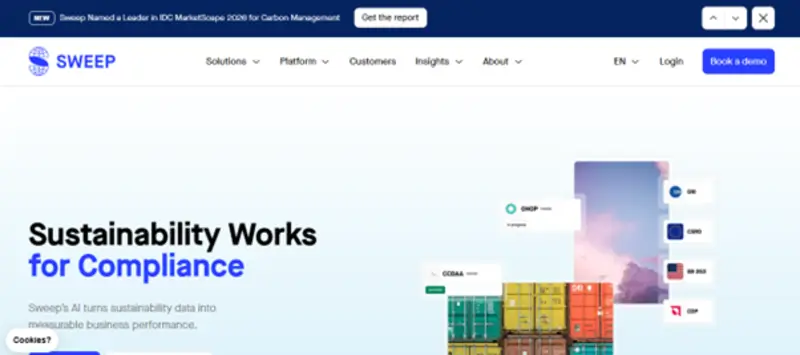
Sweep was founded in 2020 and is headquartered in Paris and London, with a US office in Denver that opened in 2025. It describes itself as a sustainability data management platform, and it is designed for organizations with many entities, suppliers and reporting obligations.
Sweep, the sustainability intelligence platform, lets teams upload their data once and reuse it across reporting frameworks instead of rebuilding each report from scratch. It was named a Leader in both the 2026 IDC MarketScape for carbon management and the Verdantix 2026 Green Quadrant for enterprise carbon management.
Its customers include L’Oréal, Swisscom and SSE. The company also offers dedicated solutions for enterprise, mid-market and financial institutions, and it is B Corp certified.
Standout Sweep Features
- A tree-based data model that assigns emissions and tasks across different branches of a business
- Reporting support for CSRD, ISSB, GRI, CDP, SFDR, SASB and the GHG Protocol, plus California’s SB 253
- AI-assisted supplier data collection that helps teams spot supply chain risk
- Sweepy, an AI assistant that can map purchase data, answer questionnaires, draft disclosures and build dashboards
- Traceable, audit-ready data to support third-party assurance
Greenly vs Sweep: Head-to-Head
Here’s how the two compare on the points most buyers care about.
| Greenly | Sweep | |
|---|---|---|
| Founded | 2019, Paris | 2020, HQ in Paris and London |
| Core focus | Guided carbon assessments, LCA and reduction plans | Sustainability data management and multi-framework reporting |
| Target customers | SMB to enterprise | Enterprise, mid-market and financial institutions |
| AI assistant | EcoPilot | Sweepy |
| Supplier data | Supplier engagement module | Supplier workflows for Scope 3 data |
| Pricing | Quote on request | Not published; demo request |
Data and Integrations
Greenly highlights its 100+ integrations for pulling in accounting, energy and cloud data automatically. Sweep centralizes data across the whole organization and value chain and connects to other systems through APIs, which helps when figures sit across several subsidiaries.
Reporting and Compliance
Both support CSRD and California’s climate disclosure laws. Greenly adds modules for EcoVadis, CBAM and EUDR, which can help exporters and suppliers responding to customer ratings.
Sweep’s focus is producing several framework reports from a single dataset. That’s useful if you’re answering CDP, CSRD and investor requests in the same year.
Support and Collaboration
Greenly builds expert help into its plans, from kick-off calls to action plan workshops. Sweep leans into collaboration, with role-based workflows that bring finance, procurement and suppliers into one place.

What About Pricing?
Neither company lists public prices. Greenly’s pricing page splits its offer into GHG, LCA and ESG products and compares three GHG plans (GHG Report Compliance, Climate Action Ready and Net Zero Contributor), with add-ons such as extra entities, SSO and custom API integration, all quoted on request.
Sweep doesn’t publish pricing either and routes inquiries through demo requests, including for Sweep Starter, an entry package for building a first footprint with the option to upgrade to Pro later. With either vendor, ask what onboarding includes, how many entities are covered and how renewals are priced.
Which One Fits Your Business?
Greenly may suit you if you’re measuring your footprint for the first time, want hands-on expert guidance or need product-level LCAs. Its action plans are a practical starting point for teams without a dedicated sustainability lead.
Sweep may suit you if you run several entities or regions, report under multiple frameworks or need supplier data at scale. Its audit-ready outputs matter most when assurance providers will review your numbers.
If your company is growing fast, think about where you’ll be in three years, not just today. It’s the same logic behind choosing scalable software anywhere else in your business, since switching systems mid-reporting cycle is painful.
Questions to Ask Before You Book a Demo
- Which frameworks do we need to report on in the next two years?
- How will supplier data be collected, and who owns it?
- Can the platform handle more entities and regions as we grow?
- What does onboarding involve, and how much internal time will it take?
- How is our data documented for auditors?
Final Verdict
Greenly and Sweep solve the same core problem from different angles. Greenly focuses on making carbon measurement approachable, with expert support and product-level tools.
Sweep is built for organizations juggling complex data, many stakeholders and overlapping regulations. Start with your reporting obligations and growth plans, then let those guide your demo conversations.
FAQ
Is Greenly or Sweep a Better Fit for Small Businesses?
Greenly markets itself to companies from SMB to enterprise and bundles expert guidance, which can help teams without in-house sustainability staff. Sweep targets enterprises, mid-market firms and financial institutions, so very small companies may not need its full scope.
Do Greenly and Sweep Cover Scope 3 Emissions?
Yes. Both measure Scope 1, 2 and 3 emissions and offer ways to collect data from suppliers.
Can Either Platform Help With CSRD Reporting?
Both list CSRD support. Sweep focuses on reusing one dataset across CSRD and other frameworks, while Greenly offers CSRD alongside modules like EcoVadis and CBAM.
How Much Do Greenly and Sweep Cost?
Neither publishes list prices. Greenly quotes on request and Sweep handles pricing through demo requests, so compare what’s included rather than just the headline figure.
Do They Use AI?
Yes. Greenly offers EcoPilot for climate questions and repetitive tasks, while Sweep offers Sweepy, which can map purchase data, answer questionnaires and draft disclosures.
